Starting off with Access to Mental Health Services, this topic delves into the significance of accessibility to mental health services for individuals and communities, shedding light on the barriers and solutions in place.
Exploring the impact of limited access and ways to enhance the availability of mental health services, this discussion aims to provide a comprehensive view of the landscape.
Access to Mental Health Services
Access to mental health services is crucial for maintaining overall well-being. Mental health services provide individuals with the necessary support, resources, and treatments to address and manage mental health conditions.
The Importance of Access to Mental Health Services
Having access to mental health services allows individuals to seek professional help, receive therapy, and access medication if needed. It also enables early intervention, which can prevent mental health conditions from worsening.
Barriers to Accessing Mental Health Services
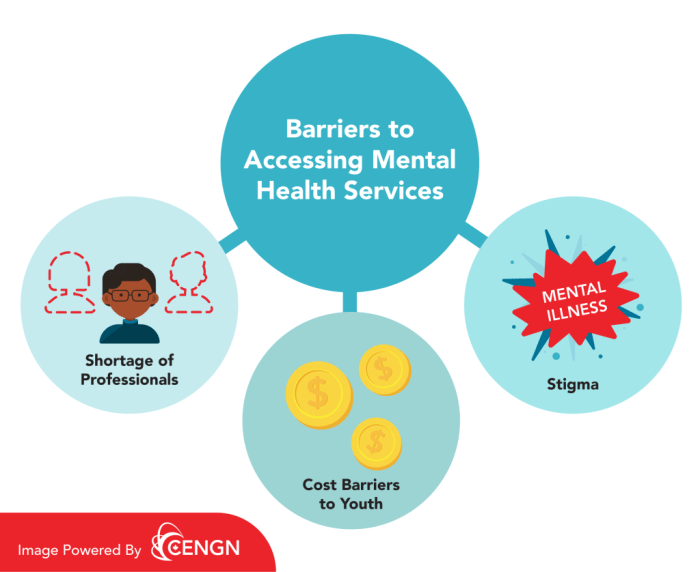
- Financial constraints: Many individuals may not be able to afford mental health services due to high costs, lack of insurance coverage, or limited financial resources.
- Stigma: The stigma surrounding mental health can prevent individuals from seeking help due to fear of judgment or discrimination.
- Lack of availability: Some communities may have a shortage of mental health providers or limited access to mental health facilities, making it difficult for individuals to receive timely care.
- Cultural barriers: Cultural beliefs and practices can impact individuals’ willingness to seek mental health services, especially if there is a lack of culturally competent care.
Impact of Limited Access to Mental Health Services
Communities with limited access to mental health services may experience higher rates of untreated mental health conditions, leading to negative outcomes such as increased hospitalizations, substance abuse, and suicide. This can further exacerbate existing disparities in health outcomes among different populations.
Healthcare Access
Improving access to mental health services in underserved communities is crucial for ensuring that everyone has the support they need. Some ways to achieve this include:
Community Outreach Programs
- Establishing mobile clinics or pop-up mental health centers in underserved areas.
- Collaborating with local community organizations to provide mental health education and resources.
- Offering telehealth services to reach individuals who may have limited transportation options.
Urban vs. Rural Access
In urban areas, access to mental health services may be more readily available due to a higher concentration of healthcare facilities. However, rural areas often face challenges such as limited providers and long travel distances. Telehealth has emerged as a valuable tool in bridging this gap by allowing individuals in rural areas to connect with mental health professionals remotely.
Role of Telehealth
Telehealth plays a significant role in increasing access to mental health services by providing virtual appointments, therapy sessions, and support groups. This technology allows individuals to receive care from the comfort of their own homes, eliminating barriers such as transportation, time constraints, and stigma associated with seeking help in person. Overall, telehealth has the potential to revolutionize mental healthcare delivery and reach underserved populations who may otherwise go without treatment.
Healthcare Costs
Seeking mental health services without adequate insurance coverage can have significant financial implications. Without insurance, individuals may have to pay out of pocket for therapy sessions, psychiatric evaluations, medication, and other necessary treatments. These costs can add up quickly, especially for those who require ongoing care.
High Healthcare Costs as a Barrier
High healthcare costs can act as a deterrent for individuals seeking mental health treatment. The fear of accumulating medical bills or not being able to afford necessary services can prevent people from accessing the care they need. This can lead to worsening mental health conditions and overall well-being.
- Individuals may delay seeking treatment or avoid it altogether due to financial concerns.
- High costs can create disparities in access to mental health services, impacting marginalized communities disproportionately.
- Even with insurance, high deductibles or copayments can still pose a financial burden for many individuals.
Making Mental Health Services More Affordable
Finding ways to make mental health services more affordable is crucial to ensure that everyone can access the care they need without financial barriers. Some potential solutions include:
- Expanding insurance coverage for mental health services to include more comprehensive benefits.
- Reducing out-of-pocket costs for mental health treatments through subsidies or sliding scale fees based on income.
- Increasing funding for community mental health centers and programs to provide low-cost or free services to those in need.
- Advocating for policy changes to address the high costs of mental health care and promote affordability and accessibility for all individuals.
Healthcare Providers
In seeking help for mental health issues, individuals have the option to consult different types of healthcare providers who specialize in this field. Each type of provider offers unique expertise and approaches to treatment.
Types of Mental Health Providers
- Psychiatrists: Medical doctors who can prescribe medication and provide therapy for mental health conditions.
- Psychologists: Professionals trained in psychology who offer therapy and counseling services.
- Clinical Social Workers: Trained professionals who provide therapy and support services to individuals and families.
- Counselors: Trained to offer counseling and support for mental health issues, often specializing in specific areas such as addiction or trauma.
- Psychiatric Nurse Practitioners: Nurses with advanced training in mental health who can diagnose and treat mental health conditions.
Importance of Cultural Competence
Cultural competence is essential in mental health providers as it ensures that individuals from diverse backgrounds receive care that is sensitive to their cultural beliefs, values, and practices. This helps establish trust and improves the effectiveness of treatment.
Impact of Shortage of Mental Health Providers
A shortage of mental health providers can significantly impact access to services, leading to long wait times for appointments and limited options for care. This shortage can particularly affect underserved communities and rural areas, where access to mental health services is already limited.
Health Insurance
Health insurance plays a crucial role in covering mental health services, ensuring that individuals have access to necessary treatments and support.
Coverage Disparities between Public and Private Insurance
There are differences in coverage for mental health services between public and private insurance plans. Public insurance programs like Medicaid are mandated to cover mental health services, including therapy and medication. On the other hand, private insurance plans may have varying levels of coverage for mental health services, with some offering comprehensive benefits while others have limited options.
Advocating for Better Mental Health Coverage
- Advocate for mental health parity laws that require insurance plans to cover mental health services at the same level as other medical services.
- Work with mental health advocacy groups to push for better coverage and access to treatment for all individuals.
- Share personal stories and experiences to highlight the importance of mental health coverage and the impact it has on individuals and communities.
- Contact legislators and policymakers to voice concerns and push for reforms in insurance coverage for mental health services.
Health Policies
Government policies play a crucial role in determining the accessibility of mental health services for individuals in need. These policies can either facilitate or hinder access to essential mental health care, impacting the overall well-being of the population. Advocacy efforts also play a significant role in influencing and shaping mental health policies at various levels of government.
Impact of Government Policies
Government policies related to mental health services can significantly impact the availability, affordability, and quality of care for individuals. For example, policies that allocate sufficient funding towards mental health programs and initiatives can expand access to services for underserved populations. On the other hand, policies that impose restrictions on insurance coverage for mental health treatments may create barriers to access for those in need.
Current Policies and Access to Mental Health Services
Currently, there are policies such as the Affordable Care Act (ACA) in the United States that have expanded access to mental health services by mandating insurance coverage for mental health treatments. However, challenges still exist, such as limited provider networks and disparities in coverage for mental health compared to physical health services. Addressing these gaps in policies is essential to ensure equitable access to mental health care for all individuals.
Role of Advocacy in Shaping Policies
Advocacy efforts play a crucial role in shaping mental health policies at the local, state, and national levels. Advocacy organizations work to raise awareness about mental health issues, advocate for policy changes to improve access to care, and hold policymakers accountable for addressing mental health needs. By amplifying the voices of those affected by mental health conditions, advocacy can drive meaningful policy reform and improve the overall mental health system.
Health Records
Accurate mental health records are essential for the continuity of care for individuals seeking mental health services. These records help healthcare providers track progress, monitor treatment effectiveness, and make informed decisions about the best course of action for each patient.
Importance of Maintaining Accurate Mental Health Records
- Accurate records provide a comprehensive view of the patient’s mental health history, including past diagnoses, medications, and treatments.
- They help healthcare providers tailor treatment plans to meet the specific needs of each individual, leading to better outcomes.
- Accurate records also facilitate communication between different healthcare providers involved in the patient’s care, ensuring continuity and coordination of services.
Challenges Associated with Sharing Mental Health Records
- Privacy concerns: Patients may be hesitant to share mental health records due to stigma or fear of discrimination.
- Legal and ethical issues: Healthcare providers must navigate complex laws and regulations governing the sharing of sensitive mental health information.
- Technical barriers: Different healthcare systems may use incompatible electronic health record platforms, making it challenging to share information seamlessly.
Advancements in Electronic Health Records
- Electronic health records (EHRs) have streamlined the process of storing and accessing mental health records, making them more readily available to authorized healthcare providers.
- Interoperability standards have improved, allowing for better communication and sharing of mental health information across different healthcare settings.
- EHRs enable more efficient and coordinated care by providing a centralized repository for patient information, reducing the risk of errors and duplication of services.
Health Screening
Health screening plays a crucial role in identifying potential mental health issues early on, allowing for timely intervention and treatment.
Process of Mental Health Screening
Mental health screenings typically involve a series of questions or assessments conducted by healthcare professionals to evaluate an individual’s mental well-being. This may include questions about symptoms, feelings, behaviors, and overall mental health history.
Role in Early Intervention
Early intervention through mental health screening can help prevent the escalation of mental health issues and improve outcomes for individuals. By identifying problems early, appropriate treatment and support can be provided promptly, leading to better overall mental health.
Barriers to Mental Health Screening
- Lack of awareness about mental health screenings and their importance
- Stigma surrounding mental health that may prevent individuals from seeking help
- Financial constraints or lack of access to healthcare services
- Cultural or language barriers that hinder communication during screenings
Successful Mental Health Screening Programs
Several successful mental health screening programs have been implemented in various settings to improve access and encourage individuals to undergo screenings:
- The National Institute of Mental Health’s online screening tools, providing anonymous assessments for various mental health conditions
- School-based mental health screening programs that aim to identify issues early in children and adolescents
- Community health centers offering integrated care that includes mental health screenings as part of routine healthcare visits
Concluding the discussion on Access to Mental Health Services, it is evident that ensuring easy access to these services is crucial for individual well-being and community resilience. By addressing barriers and advocating for policy changes, we can create a more inclusive and supportive environment for mental health care.
General Inquiries
How can cultural competence impact mental health services?
Cultural competence plays a vital role in mental health services by ensuring that providers understand and respect the cultural backgrounds of their clients. This leads to more effective and personalized care.
What are some examples of successful mental health screening programs?
Programs like school-based screenings, workplace mental health initiatives, and community outreach programs have proven to be successful in identifying mental health issues early and connecting individuals with appropriate care.