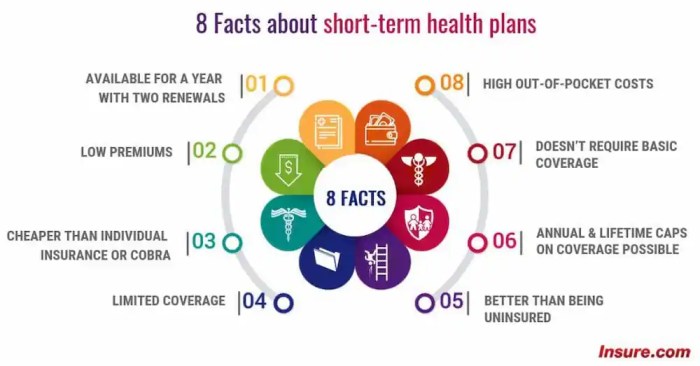
Exploring the realm of Short-Term Health Insurance Plans, this introduction sets the stage for a comprehensive discussion on the advantages, drawbacks, and financial aspects of these plans. Dive in to uncover all you need to know.
Introduction to Short-Term Health Insurance Plans
Short-term health insurance plans are temporary health coverage options designed to provide individuals with limited coverage for a specific period of time.
These plans typically offer coverage for essential health benefits such as doctor visits, hospital stays, emergency care, and some prescription drugs. However, they may not cover all the benefits provided by traditional health insurance plans.
Typical Coverage and Duration of Short-Term Plans
- Short-term health insurance plans usually offer coverage for a period of 30 days up to 364 days, depending on the state regulations.
- These plans may cover services like doctor visits, hospital stays, emergency care, and some prescription drugs.
- Short-term plans do not typically cover pre-existing conditions, maternity care, mental health services, or preventive care.
- Individuals can customize their coverage options based on their needs and budget.
Eligibility Criteria for Enrolling in Short-Term Health Insurance Plans
- Applicants for short-term health insurance plans must meet certain eligibility criteria, which may vary by insurance provider and state regulations.
- Generally, individuals must be under a certain age limit, usually 65 years old, to enroll in a short-term plan.
- Applicants may be required to provide information about their medical history and current health status to determine eligibility.
- Short-term plans are typically available to individuals who are in good health and do not have pre-existing conditions.
Benefits of Short-Term Health Insurance Plans
Short-term health insurance plans offer several advantages that make them a practical option for individuals in certain situations. These benefits include:
Cost-Effectiveness
Short-term health insurance plans are typically more affordable than long-term health insurance options. This makes them a cost-effective choice for individuals who are in between jobs, waiting for employer-sponsored coverage to begin, or simply looking for temporary coverage.
Flexibility
Short-term health insurance plans offer flexibility in terms of coverage duration. They can be tailored to fit the specific needs of the individual, whether they need coverage for a few weeks or several months. This flexibility allows individuals to choose a plan that aligns with their unique circumstances.
Rapid Coverage
One of the key benefits of short-term health insurance plans is the quick coverage they provide. In many cases, individuals can enroll in a plan and have coverage as soon as the next day. This is especially beneficial for those who need immediate medical attention or have time-sensitive healthcare needs.
Situational Coverage
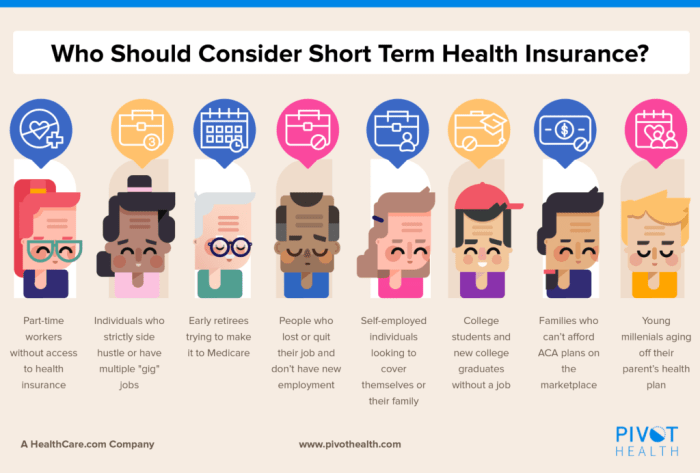
Short-term health insurance plans are ideal for situations such as transitioning between jobs, graduating from college and losing student health coverage, early retirement before Medicare eligibility, or waiting for open enrollment periods for long-term plans. These plans provide temporary coverage during these transitional periods, ensuring individuals are protected during times of uncertainty.
Limitations of Short-Term Health Insurance Plans
Short-term health insurance plans offer a temporary solution for individuals in need of coverage for a limited period. While they provide some benefits, there are certain limitations to be aware of when considering this type of insurance.
Services Not Typically Covered
- Pre-existing conditions: Short-term plans often do not cover pre-existing conditions, meaning any medical conditions you had before enrolling in the plan may not be covered.
- Maternity care: Pregnancy and maternity-related services are usually not covered under short-term health insurance plans.
- Mental health services: Coverage for mental health care, including therapy and counseling, may be limited or excluded from short-term plans.
- Preventive care: Routine check-ups, vaccinations, and screenings may not be covered by short-term insurance.
Comparison to Comprehensive Health Insurance
Short-term health insurance plans differ from comprehensive health insurance coverage in several key ways. While short-term plans are more affordable and flexible in terms of coverage duration, they come with significant limitations. Comprehensive health insurance, on the other hand, offers more comprehensive coverage, including benefits for pre-existing conditions, maternity care, mental health services, and preventive care. It provides more long-term security and protection for various medical needs, making it a more suitable option for those seeking comprehensive coverage.
Access to Healthcare with Short-Term Health Insurance Plans
Short-term health insurance plans can have a significant impact on access to healthcare services for individuals in need of temporary coverage. These plans are designed to provide basic medical coverage for a limited duration, offering a more affordable option compared to traditional health insurance.
Network of Healthcare Providers
Short-term health insurance plans typically have a limited network of healthcare providers, which can affect access to specialized care. While some plans may allow individuals to see out-of-network providers, the costs associated with these visits can be significantly higher.
- Individuals covered under short-term health insurance plans may need to ensure that their preferred healthcare providers are within the plan’s network to avoid additional expenses.
- It is essential for individuals considering short-term plans to review the list of in-network providers to assess whether the coverage meets their healthcare needs.
Emergency Medical Situations
Short-term health insurance plans typically cover emergency medical situations, providing individuals with access to urgent medical care when needed. However, it is crucial to understand the limitations and conditions associated with emergency coverage under these plans.
- Individuals should familiarize themselves with the process of seeking medical assistance in case of emergencies while covered under a short-term health insurance plan.
- It is important to clarify the coverage details for emergency services, including any pre-authorization requirements or restrictions on specific types of treatments.
Costs Associated with Short-Term Health Insurance Plans
Short-term health insurance plans typically have lower upfront costs and monthly premiums compared to traditional health insurance options. This can make them a more affordable choice for individuals who are looking for temporary coverage.
Upfront Costs and Monthly Premiums
Short-term health insurance plans usually require a one-time upfront payment when the policy is purchased. This payment covers the cost of the plan for the specified duration, which is typically between 30 days to 12 months. Additionally, policyholders are required to pay a monthly premium to maintain coverage.
Managing Out-of-Pocket Expenses
While short-term health insurance plans have lower monthly premiums, they often come with higher out-of-pocket expenses. Policyholders may need to pay deductibles, copayments, and coinsurance for medical services. It is essential for individuals to understand these costs and budget accordingly to manage their out-of-pocket expenses effectively.
Comparison to Traditional Health Insurance Options
When comparing the overall cost of short-term health insurance plans to traditional health insurance options, it is crucial to consider both premiums and out-of-pocket expenses. While short-term plans may have lower monthly premiums, they typically have higher out-of-pocket costs. On the other hand, traditional health insurance plans may have higher premiums but lower out-of-pocket expenses. It is essential for individuals to evaluate their healthcare needs and financial situation to determine which option is more cost-effective for them.
Healthcare Providers and Short-Term Health Insurance Plans
When it comes to short-term health insurance plans, it is important to consider how healthcare providers view patients who have this type of coverage. Understanding the perspective of healthcare providers can shed light on the challenges patients may face and how short-term plans handle referrals to specialists or additional services.
Healthcare Providers’ Perspective
Healthcare providers may have mixed feelings about patients with short-term health insurance. While these plans can provide coverage for basic medical needs, they often come with limitations in terms of network coverage and reimbursement rates. Some providers may be hesitant to accept patients with short-term plans due to concerns about payment and potential out-of-network issues.
Challenges for Patients
Patients with short-term health insurance plans may encounter challenges in finding providers that accept their coverage. Since short-term plans typically have narrower networks compared to traditional health insurance, patients may struggle to access certain healthcare providers or facilities. This can lead to delays in care or difficulties in obtaining necessary medical services.
Referrals and Additional Services
Short-term health insurance plans may have specific protocols in place for referrals to specialists or additional services. Patients may need to obtain prior authorization or follow certain procedures to access these services through their short-term plan. It is important for patients to understand the referral process and any limitations or requirements set by their insurance provider to ensure smooth coordination of care.
Health Policies and Regulations for Short-Term Health Insurance Plans
Short-term health insurance plans are governed by key policies and regulations that dictate their availability and terms. These regulations are crucial in ensuring that consumers are protected and have access to adequate coverage. Recent changes in legislation have also impacted the landscape of short-term plan coverage, influencing how these plans are offered and utilized.
Impact of Recent Legislation Changes
Recent updates in legislation have imposed limitations on short-term health insurance plans, aiming to address gaps in coverage and protect consumers. For instance, regulations may restrict the duration of short-term plans, require coverage for essential health benefits, or mandate certain consumer protections. These changes have shaped the availability and terms of short-term health insurance plans, making them more standardized and comprehensive.
Key Policies Governing Short-Term Health Insurance Plans
- Duration Limits: Regulations may specify the maximum duration for short-term health insurance plans, typically ranging from a few months to a year. This ensures that consumers do not rely on short-term plans as long-term solutions.
- Coverage Requirements: Policies may mandate coverage for essential health benefits, such as preventive care, prescription drugs, and maternity services. This ensures that consumers have access to comprehensive healthcare services.
- Consumer Protections: Regulations may include provisions for consumer protections, such as guaranteed renewability, coverage for pre-existing conditions, and a cap on out-of-pocket expenses. These protections safeguard consumers from unexpected healthcare costs.
- State Regulations: States may have additional regulations governing short-term health insurance plans, such as restrictions on renewal options or coverage mandates specific to the state’s healthcare needs.
Health Records and Short-Term Health Insurance Plans
When it comes to short-term health insurance plans, the management and sharing of health records play a crucial role in determining coverage and premiums.
Health Record Management
Health records under short-term health insurance plans are typically managed by the insurance providers themselves. This includes storing information related to past medical history, treatments, and any pre-existing conditions that may impact coverage.
Privacy and Security Implications
- Sharing health information with short-term insurance providers raises concerns about privacy and security. It is essential for individuals to understand how their data is being used and protected.
- Providers must adhere to strict regulations to safeguard the confidentiality of health records and ensure that sensitive information is not exposed to unauthorized parties.
- Individuals should be aware of the risks involved in sharing personal health details and inquire about the measures in place to secure their data.
Influence on Coverage Decisions
- Health records can significantly influence coverage decisions and premiums for short-term health insurance plans.
- Pre-existing conditions or a history of certain medical treatments may lead to limitations in coverage or higher premium rates.
- Insurance providers assess the risks associated with an individual’s health status based on their records, impacting the terms of the policy they offer.
Health Screening and Short-Term Health Insurance Plans
Health screening plays a crucial role in the application process for short-term health insurance plans. It helps insurance providers assess the health status of applicants and determine potential risks associated with providing coverage.
Types of Screenings or Assessments
- Basic medical history questionnaire: Applicants are typically required to provide information about their medical history, including pre-existing conditions, past surgeries, and current medications.
- Physical examination: Some short-term health insurance plans may require applicants to undergo a physical examination to evaluate their overall health status.
- Laboratory tests: Blood tests, urine analysis, and other laboratory tests may be necessary to screen for certain health conditions.
Impact on Coverage or Premiums
- Approval or denial of coverage: Based on the results of the health screening, insurance providers may approve or deny coverage for short-term health insurance plans.
- Premium adjustments: Health screening results can also influence the premiums charged for coverage. Applicants with higher health risks may face higher premiums.
- Exclusions or limitations: In some cases, certain health conditions identified through screenings may lead to exclusions or limitations in coverage for specific treatments or services.
In conclusion, Short-Term Health Insurance Plans offer a flexible yet limited coverage option for individuals seeking temporary healthcare solutions. Understanding the nuances of these plans is key to making informed decisions about your health insurance needs.
Frequently Asked Questions
What is the typical duration of short-term health insurance plans?
Short-term health insurance plans usually provide coverage for a few months up to a year, offering temporary solutions for individuals in transition periods.
Are pre-existing conditions covered under short-term health insurance plans?
Pre-existing conditions are typically not covered under short-term health insurance plans. These plans are designed for short periods and may not include coverage for existing medical conditions.
Can I renew a short-term health insurance plan once it expires?
Renewal options for short-term health insurance plans vary by provider. Some plans may allow renewal for additional coverage periods, while others may require reapplication after expiration.